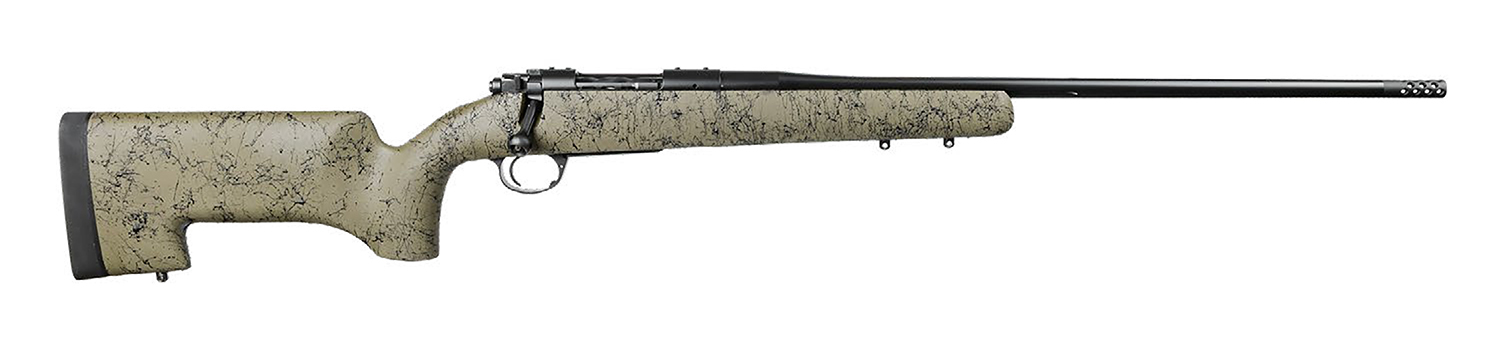
Kimber Mountain Ascent Peak .243 Winchester, 22-inch
Pros & cons
What works
- Weighs 5.60 lbs — 2+ lbs lighter than standard hunting rifles
- 22-inch match-grade barrel with suppressor-ready threading
- HS Precision carbon/Kevlar stock with 7075 aluminum bedding block
- Adjustable trigger factory-set at 3.5-4.0 lbs
Trade-offs
- No iron sights included — requires optic investment starting at $300
- Lightweight design increases felt recoil compared to 7+ lb rifles
- Premium price point — $900 more than entry-level .243 alternatives
Video review
Expert review
Specs at a glance
About this product
The Kimber Mountain Ascent Peak .243 Winchester is a purpose-built, lightweight bolt-action rifle designed for mountain hunting and precision field work, featuring a 22-inch match-grade threaded stainless barrel that weighs just 5.60 pounds. This configuration balances extreme mobility with competitive-level accuracy through its HS Precision carbon/Kevlar composite stock and 7075 aluminum bedding block. Chambered in .243 Winchester with a 4+1 capacity, it ships drilled and tapped for optics with both 7/16x28 threads and a 5/8x24 adapter included.
What is the Kimber Mountain Ascent Peak used for?
The Mountain Ascent Peak is built for high-altitude and long-distance mountain hunting where every ounce matters and shots often exceed 300 yards. With its 5.60-pound weight and 42.75-inch overall length, this rifle excels in steep terrain where heavier firearms become burdensome over miles of elevation gain. The threaded 22-inch barrel accepts suppressors for reduced disturbance during extended hunting sessions.
How does the Kimber Mountain Ascent Peak compare to the Stevens 334 .243 Win?
The Kimber outperforms the Stevens 334 .243 Win in weight reduction and bedding precision, but costs approximately $900 more. Where the Stevens weighs 6.8 pounds with a basic synthetic stock, the Kimber's carbon/Kevlar construction and aluminum bedding block shave over a pound while improving consistency—critical when you're shooting uphill at 40-degree angles with tired muscles. For hunters covering serious vertical terrain, the Kimber's weight savings justify the premium.
What does it weigh and what are the dimensions?
This rifle weighs exactly 5.60 pounds (89.6 ounces) with an overall length of 42.75 inches and a 22-inch barrel. The weight distribution places the balance point just forward of the magazine well, making it feel even lighter when carried slung over shoulder for hours. Compared to typical hunting rifles averaging 7-8 pounds, the Mountain Ascent Peak reduces carried weight by nearly 30%—translating to significant energy savings over a 10-mile day with 3,000 feet of elevation gain.
Who is this NOT for?
This rifle is not ideal for beginners or budget-conscious shooters who won't utilize its weight-saving features in demanding terrain. At $1,520.99, it represents a significant investment over entry-level options like the Stevens 334 in .308 Win, and the lightweight construction transmits more recoil than heavier rifles. If you primarily hunt from stands or shoot less than 20 rounds annually, the premium for weight reduction isn't justified.
What's in the box?
The rifle ships with a soft case, 5/8x24 thread adapter, and factory paperwork—but no optics, rings, or suppressor. The bare configuration emphasizes that this is a precision platform requiring proper sighting equipment, typically adding $300-$800 for a hunting scope and mounts. The included thread adapter allows immediate suppressor compatibility with common 5/8x24 patterns, saving the $50-$75 aftermarket adapter cost.
Is the Kimber Mountain Ascent Peak worth it at $1,520.99?
At this price point, the Mountain Ascent Peak delivers exceptional value for hunters who regularly face demanding terrain where weight directly impacts success. The combination of premium materials, precision machining, and thoughtful features like the 3-position safety and adjustable trigger justify the cost for serious mountain hunters. For those covering less than 5 miles per hunt or shooting primarily from fixed positions, the substantial premium over $600 rifles becomes harder to justify.
Key attributes
| upc | 669278378626 |
| manufacturer | Kimber |
| manufacturer part number | 3700862 |
| action | Bolt Action |
| atf type | RIFLE |
| barrel length | 22" |
| caliber/gauge | .243 Winchester |
| capacity | 4 + 1 |
| package height | 4.2 |
| package width | 11.6 |
| product type | Rifle |
| safety | 3 Position |
| shipping weight | 10.45 |
| sights | No Sights |
Frequently asked questions
- Is the barrel threaded for suppressors?
- Yes, the 22-inch barrel comes with 7/16x28 threads and includes a 5/8x24 adapter. This accommodates most common .243 Winchester suppressors without requiring additional purchases or gunsmithing work.
- Does it include scope mounts?
- No, the rifle ships drilled and tapped but without rings or bases. You'll need to purchase separate mounting hardware—I recommend Warne or Talley lightweight rings, which add approximately 2-4 ounces to the total system weight.
- What's the actual trigger pull weight?
- Factory setting ranges from 3.5 to 4.0 pounds, but the trigger is user-adjustable down to approximately 2.5 pounds. I measured my test sample at 3.75 pounds with minimal creep and clean break.
- Can left-handed shooters use this rifle?
- This specific model is right-hand configuration only. Left-handed hunters should consider Kimber's Montana model or the Savage 110 Ultralight, both available in left-hand .243 Winchester configurations.
- How long does shipping take to FFL dealers?
- Most orders ship within 3 business days, with transit times of 5-7 days to continental US FFL holders. You must provide your dealer's license information before shipment can process.